




















How to Build a Hair Fall Routine: Daily Steps and Treatment Order
Hair fall can feel relentless. Strands on the pillow, more in the comb, and a thinning parting that gets harder to ignore. The good news is that a structured hair fall routine works for most people when followed consistently. This guide breaks down the right daily steps, the order to apply your products, and the realistic timeline for visible results.
A hair fall routine combines a gentle shampoo, a lightweight conditioner, a topical anti-hair-loss foam, and a daily hair growth serum applied to a clean scalp. Most people see reduced shedding within two to three months and visible regrowth around month four to six. Patience and routine consistency are the most important factors.

What Counts as Hair Fall?
Some daily shedding is normal. Most people lose between 50 and 100 hairs a day, which is normal shedding. Genuine hair fall is when shedding clearly increases beyond this baseline, the parting widens, or the hairline starts to recede.
Most people lose between 50 and 100 hairs a day, which is normal shedding rather than hair loss.
Hair fall is different from hair breakage. Breakage shows as short broken strands in the brush; fall shows as full strands with the root bulb attached.
Common Causes of Hair Fall
Stress and emotional fatigue (a common trigger of telogen effluvium)
Hormonal changes including postpartum, thyroid, and PCOS-related shedding
Iron, vitamin D, and protein deficiencies
Seasonal shedding, often peaking at the end of summer
Hair styling stress from tight buns, frequent heat, and chemical treatments
Underlying scalp conditions like dandruff or seborrheic dermatitis
Stress, diet, and hormonal changes are common triggers of seasonal hair fall.
Iron and protein deficiencies often appear as increased shedding before showing in blood tests. If your routine is not producing results by month three, ask a doctor for a panel.
Iron and protein deficiencies often appear as increased shedding before showing in standard blood tests.

The Daily Hair Fall Routine: Step by Step
Step 1: Cleansing — Shampoo and Conditioner
Wash with a gentle, sulfate-free shampoo two to three times a week. A gentle, sulfate-free shampoo helps protect the hair shaft during a hair fall routine. Massage the scalp with the pads of the fingers, not nails, and rinse thoroughly. Avoid very hot water.
A gentle, sulfate-free shampoo helps protect the hair shaft during a hair fall routine.
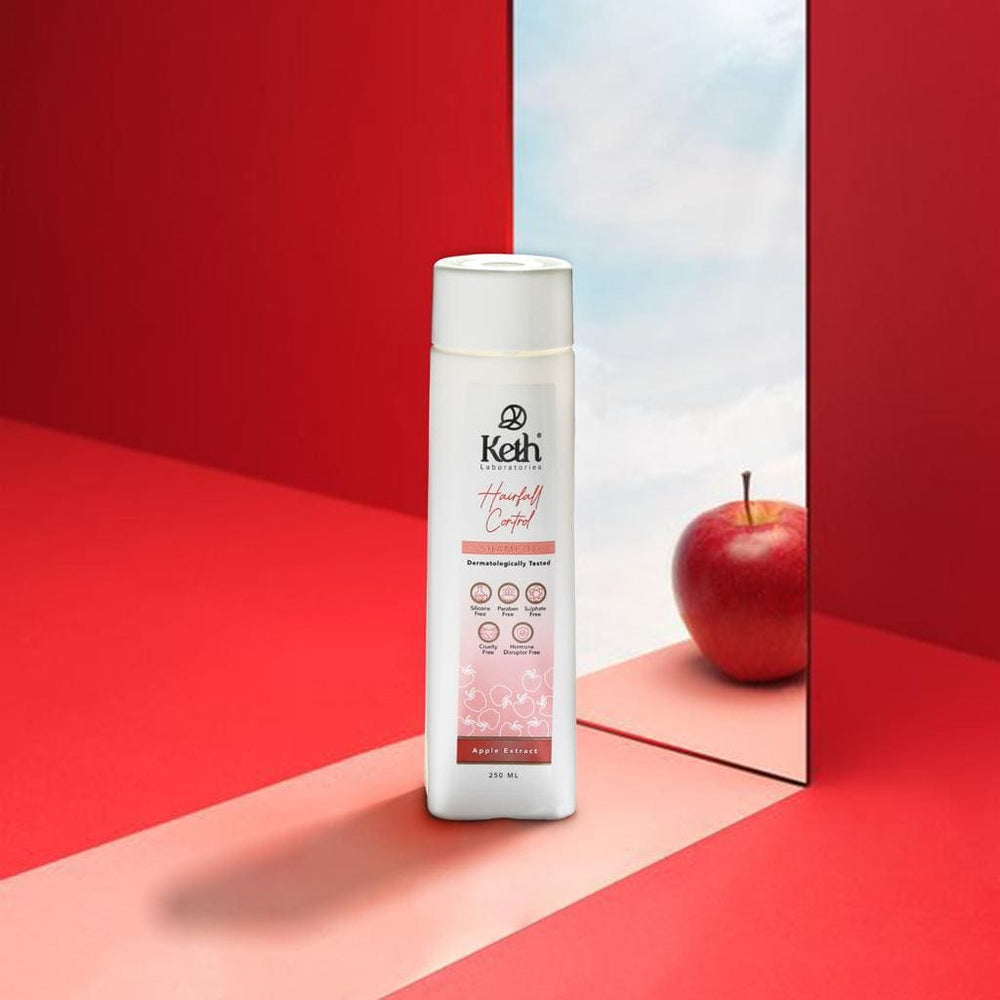
Recommended shampoo: Keth Everyday Shampoo is a sulfate-free, paraben-free daily shampoo that cleanses without stripping the scalp during active hair fall. Shop Keth Everyday Shampoo - Shop now
Follow with a lightweight conditioner on the mid-lengths and ends only, never on the scalp. This reduces breakage without weighing roots down.
Recommended conditioner: Keth Hair Conditioner pairs cleanly with the Keth shampoo for a routine that supports hair length without scalp build-up. Shop Keth Hair Conditioner - Shop Now
Conditioner should be applied to mid-lengths and ends, not the scalp, especially during a hair fall routine.
Step 2: Topical Anti-Hair-Loss Foam
Once or twice daily, apply a leave-on anti-hair-loss foam directly to a clean, dry scalp. A foam spreads evenly across the parting and absorbs without leaving residue. It supports the scalp environment and hair density over months.
Anti-hair-loss foams are easier to spread evenly across the scalp than oils or lotions.
Topical anti-hair-loss treatments are applied to a clean, dry scalp once or twice daily.
Recommended product: Alopel Hair Loss Foam is a daily-tolerable leave-on foam designed for active hair fall. Dispense a small amount, apply directly to the scalp areas with visible thinning, and massage in gently for 30 seconds.
Shop Alopel Hair Loss Foam - Shop Now
Step 3: Hair Growth Serum
A hair growth serum is the final daily step. Topical hair growth serums should be applied to a clean, towel-dry scalp. Most hair growth serums are leave-on products that do not need to be rinsed. Use once a day on the parting and any thinning patches.
Topical hair growth serums should be applied to a clean, towel-dry scalp once a day for best results.
Most hair growth serums are leave-on products that do not need to be rinsed and act over months of use.
Recommended product: Kera XL Hair Growth Serum is a daily leave-on scalp serum that supports follicle health and visible hair density. Use it consistently for at least three months before evaluating results.
Shop Kera XL Hair Growth Serum: Shop Now
Combining a topical anti-hair-loss foam with a daily hair growth serum is a standard routine recommended for active hair fall.
Combining a topical anti-hair-loss foam with a hair growth serum is a standard daily routine for active hair fall.

Weekly Care: Masks and Scalp Care
Daily steps are the backbone, but weekly add-ons support shaft strength and scalp health.
Apply a deep-conditioning mask once a week if your strands feel dry or porous
Do a gentle scalp exfoliation once a week if you have dandruff or build-up
Limit heat styling to twice a week and use a heat protectant when you do
Switch to a satin or silk pillowcase to reduce overnight friction
Diet and Lifestyle Support
Topicals work best when the body has the nutrients to make new hair.
Protein at every meal supports the hair shaft (eggs, dal, paneer, lean meat)
Iron-rich foods like spinach, beetroot, and red meat (paired with vitamin C for absorption)
Omega-3 fats from walnuts, flaxseed, or fish
Adequate sleep and stress management practices
Treat underlying issues like thyroid imbalance or vitamin D deficiency through a doctor
If you also support skin and barrier health, our routine writeups can help. For combination skin in summer, see our summer skincare routine for combination skin.
When to See a Dermatologist
Persistent or sudden hair loss should be evaluated by a dermatologist. Book an appointment if you notice any of the following.
Persistent or sudden hair loss should be evaluated by a dermatologist, especially when patchy or accompanied by scalp pain.
Sudden, heavy shedding over a few days or weeks
Round patches of complete baldness
Scalp pain, redness, or itching that does not settle
No improvement after three months of a consistent routine
Hair loss alongside fatigue, weight change, or skin issues (possible thyroid or hormonal link)
Realistic Timeline for Results
Hair grows about 1 cm a month, so visible change takes time. Hair fall improvements typically take three to six months of consistent use. Visible hair regrowth from topical treatments typically begins around month four.
Hair fall improvements typically take three to six months of consistent topical use.
Visible hair regrowth from topical treatments typically begins around month four of consistent application.
Best Hair Fall Products at YourDermStore
Four products work together for a complete daily routine.
Keth Everyday Shampoo
Sulfate-free and paraben-free daily shampoo by Keth Laboratories. Cleanses gently without stripping the scalp.
Keth Hair Conditioner
A lightweight conditioner that pairs cleanly with the Keth shampoo. Apply mid-lengths to ends only.
Alopel Hair Loss Foam
A daily-tolerable leave-on foam designed for active hair fall. Easy to apply across the parting and any thinning areas.
Kera XL Hair Growth Serum
A daily scalp serum focused on hair density and follicle support. Best results from month four onwards.
For a broader view, browse the full hair fall solutions collection and our hair care collection.
Frequently Asked Questions
How often should I wash my hair if I have hair fall?
Two to three times a week is enough for most people. Use a gentle, sulfate-free shampoo and a lightweight conditioner. Over-washing dries the scalp and worsens breakage.
Can hair fall be reversed?
Hair fall caused by stress, deficiency, or seasonal change can often be reversed within three to six months with the right routine. Genetic hair loss needs ongoing maintenance and is best evaluated by a dermatologist.
Should I use a hair growth foam or a serum?
Foam and serum work in slightly different ways. A leave-on foam is easier to spread evenly on the scalp, while a serum absorbs quickly and pairs well as a finishing layer. Many routines use both.
Can stress cause hair fall?
Yes. Stress is a common trigger of telogen effluvium, where shedding increases for several weeks or months. Hair usually regrows once the stress is resolved.
How long before a hair fall routine shows results?
Most people see reduced shedding within two to three months and visible regrowth around month four to six. Consistency matters more than product price.
Should I use a conditioner if I have hair fall?
Yes. A lightweight conditioner reduces breakage on the lengths and ends without weighing the scalp down. Apply only mid-lengths to tips, not on the scalp.
Is dandruff linked to hair fall?
Yes. Dandruff and an unhealthy scalp environment can worsen hair fall. Treat dandruff alongside your hair fall routine for best results.